
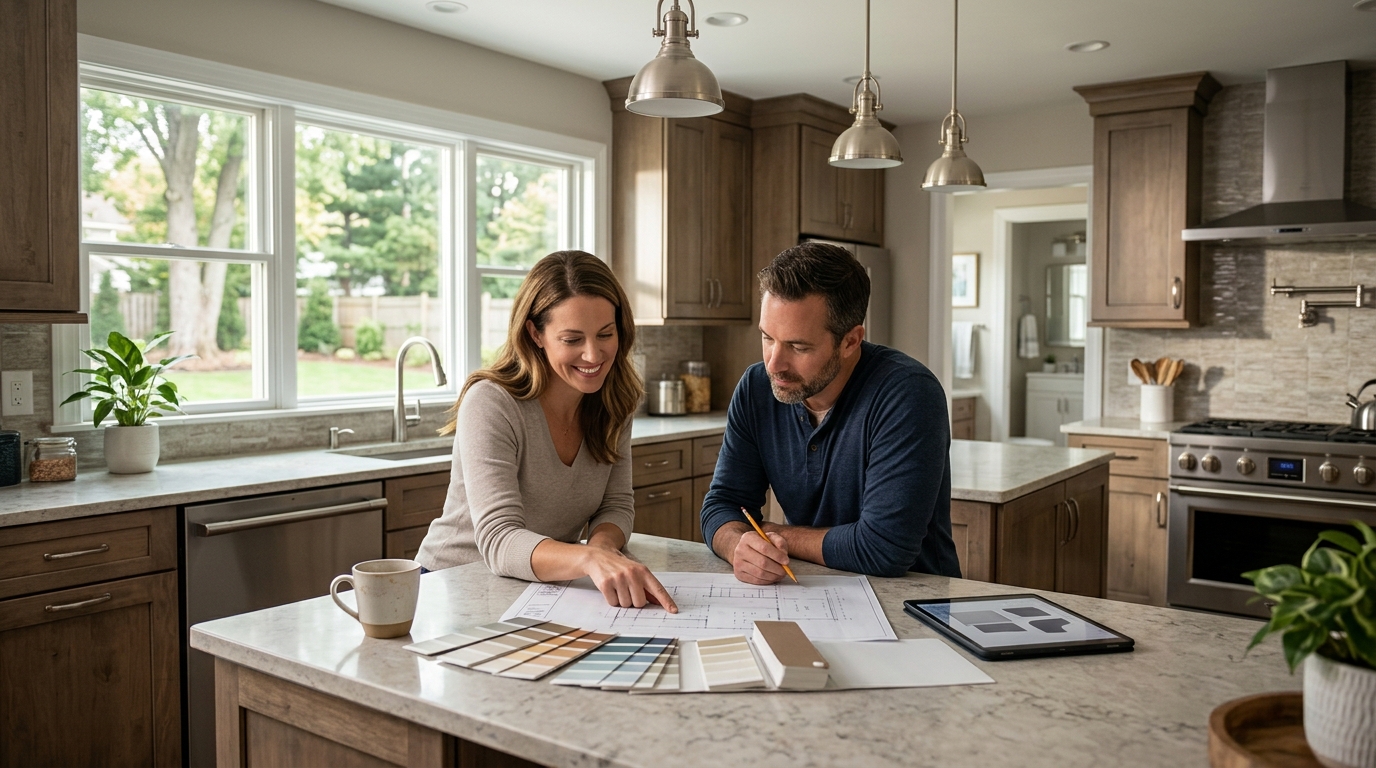
Planning a home remodeling project in New Jersey can feel overwhelming, but it does not have to be. Whether you are updating a kitchen, renovating a bathroom, or replacing your roof and siding, the difference between a smooth renovation and a stressful one comes down to preparation. With U.S. homeowner spending on improvements expected to reach $522 billion by the end of 2026, more families than ever are investing in their homes. This guide walks you through every phase of a successful remodel in the Garden State, from initial planning to final walkthrough.
1. Define Your Remodeling Goals and Priorities
Before contacting any contractor, sit down and clarify exactly what you want to accomplish. Are you remodeling to increase resale value, improve daily comfort, or address structural issues like an aging roof? Your answer shapes every decision that follows.
Identify Must-Haves vs. Nice-to-Haves
Create two lists. The first should include non-negotiable upgrades such as fixing water damage or replacing outdated electrical panels. The second can include aspirational items like a spa-style shower or custom cabinetry. This exercise prevents scope creep once work begins.
Consider Your Home's Biggest Needs
New Jersey homes face unique challenges from harsh winters and humid summers. Exterior upgrades like professional roofing and siding installation protect your home from the elements while boosting curb appeal. Interior projects such as kitchen remodeling and bathroom renovation improve both livability and property value.
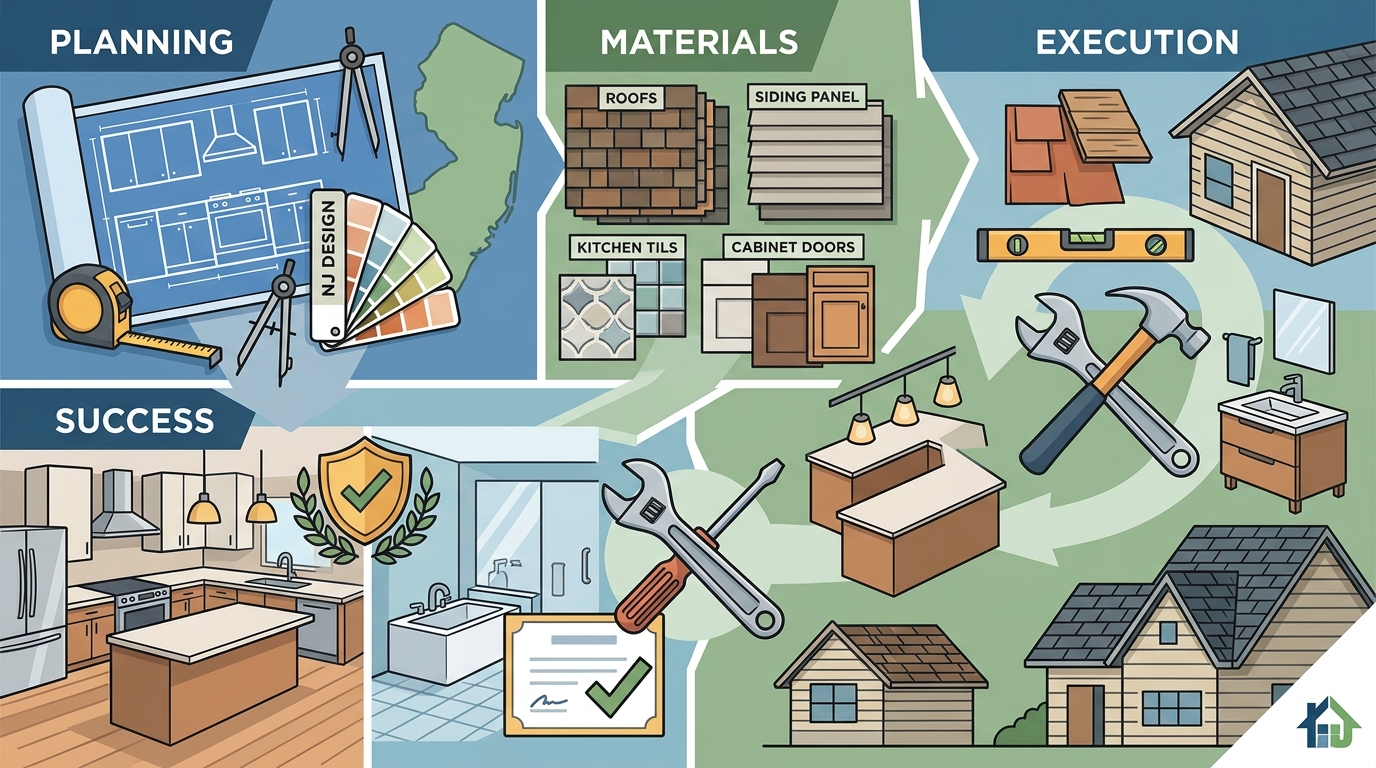
2. Set a Realistic Budget With a Contingency Buffer
A remodeling budget is a detailed financial plan that accounts for materials, labor, permits, and unexpected costs. According to industry data, 39% of homeowners exceed their renovation budget due to unforeseen expenses like hidden water damage or outdated wiring. Experts consistently recommend setting aside a 10% to 20% contingency buffer above your estimated total.
Average NJ Remodeling Costs at a Glance
| Project Type | Typical Cost Range | Estimated ROI |
|---|---|---|
| Minor Kitchen Remodel | $19,000 - $28,000 | 96% - 113% |
| Mid-Range Bathroom Remodel | $15,000 - $26,000 | 60% - 80% |
| Roof Replacement | $10,000 - $30,000 | 60% - 68% |
| Siding Replacement | $12,000 - $25,000 | 80% - 95% |
| Basement Finishing | $20,000 - $50,000 | ~71% |
Sources: 2025 Cost vs. Value Report (Zonda/Remodeling Magazine), Angi, and HomeLight.
3. Understand NJ Permit Requirements
A building permit is an official approval from your municipality confirming that your planned construction meets local safety and building codes. In New Jersey, permit rules are governed by the Uniform Construction Code (UCC), which applies to all municipalities across the state.
When Do You Need a Permit?
Most remodeling projects that involve structural changes, electrical work, plumbing modifications, or HVAC system updates require a permit. Kitchen and bathroom remodels are the most permit-heavy rooms in a home. Cosmetic updates like painting, new hardware, or replacing cabinet doors typically do not need permits.
What Happens If You Skip Permits?
Skipping permits can lead to fines, insurance complications, and even forced removal of completed work. Unpermitted work can also hold up a future home sale or lower your property value. A reputable contractor will handle the entire permitting process for you, from filing paperwork to scheduling inspections. Learn more about the NJ kitchen remodel permit process on our blog.
4. Choose the Right Remodeling Contractor
A remodeling contractor is a licensed professional who manages your renovation from design through completion, coordinating subcontractors, materials, and inspections. Choosing the wrong one is the single fastest way to derail a project.
What to Look For
Verify that the contractor holds a valid New Jersey Home Improvement Contractor (HIC) registration. Ask for proof of liability insurance and workers' compensation coverage. Request references from recent local projects and check online reviews. American Home Remodeling has served over 20,000 customers across New Jersey with more than 40 years of experience. You can read verified feedback on our customer reviews page.
Red Flags to Avoid
Be cautious of contractors who demand full payment upfront, refuse to provide a written contract, or cannot show proof of insurance. A trustworthy contractor will offer a detailed scope of work, a transparent payment schedule, and clear communication throughout the project. For a deeper look, read our guide on how to find a good contractor.
5. Maximize Your Return on Investment
Not all remodeling projects deliver equal financial returns. According to the 2025 Cost vs. Value Report, exterior curb appeal projects consistently outperform interior renovations in ROI. A garage door replacement, for example, delivers up to a 268% return, while a minor kitchen remodel returns approximately 113%.
Interior vs. Exterior ROI
Eight of the top 10 projects for cost recouped at resale are exterior replacements, including siding and entry door upgrades. Inside the home, minor kitchen remodels outperform major overhauls every time. The same pattern holds for bathrooms: a mid-range bath remodel recoups roughly 80% of costs, compared to about 42% for an upscale overhaul.
If you are considering exterior work, explore our roofing and siding services to learn how upgrading your home's exterior can provide both protection and strong resale value.
6. Manage the Project Timeline Effectively
Even the best-planned remodel can hit delays from weather, material backorders, or permit processing times. In New Jersey, permit approval timelines vary by municipality, and delays can occur depending on project complexity.
Tips for Staying on Schedule
Finalize all design decisions before demolition begins. Order long-lead materials such as custom cabinets or specialty tile early. Maintain open communication with your contractor through weekly check-ins. If your project involves multiple trades like roofing, masonry, and interior work, coordinate sequencing carefully to avoid bottlenecks.
Best Seasons to Remodel in NJ
Spring and fall are generally the best times for exterior work in New Jersey, when temperatures are moderate and humidity is lower. Interior projects like kitchen and bathroom remodels can proceed year-round, making winter an ideal time to lock in contractor availability.
Key Takeaways
- Define clear goals and separate must-haves from nice-to-haves before starting any renovation.
- Set a budget with a 10% to 20% contingency buffer to cover unexpected costs.
- Most NJ remodeling projects require permits under the Uniform Construction Code; never skip this step.
- Verify your contractor's NJ HIC registration, insurance, and references before signing a contract.
- Minor kitchen remodels offer the highest interior ROI at approximately 113%, according to the 2025 Cost vs. Value Report.
- Exterior curb appeal projects like siding and roofing consistently deliver the strongest resale returns.
- Communicate regularly with your contractor and finalize design choices before demolition day.
Frequently Asked Questions
Do I need a permit for a kitchen remodel in New Jersey?
Yes, most kitchen remodels in NJ require permits, especially if the project involves electrical, plumbing, or structural changes. Cosmetic updates like painting or replacing hardware typically do not. Your contractor should handle all permit applications and inspections on your behalf.
How much does a bathroom remodel cost in NJ?
A mid-range bathroom remodel in New Jersey typically costs between $15,000 and $26,000. The final price depends on the scope of work, materials chosen, and whether plumbing or layout changes are involved. Visit our bathroom remodeling cost guide for a detailed breakdown.
What is the best time of year to remodel a home in New Jersey?
Spring and fall are ideal for exterior projects like roofing and siding due to moderate weather. Interior remodels such as kitchens and bathrooms can be done year-round, with winter often offering better contractor availability and scheduling flexibility.
How do I choose a reliable remodeling contractor in NJ?
Look for a contractor with a valid NJ Home Improvement Contractor registration, proof of insurance, strong online reviews, and a portfolio of completed local projects. Always get a written contract with a detailed scope of work and payment schedule.
What home remodeling projects have the best ROI?
Exterior curb appeal projects lead the way. Garage door replacement offers up to 268% ROI, while siding replacement and minor kitchen remodels also deliver strong returns. Major upscale renovations tend to have the lowest ROI at resale.
How long does a kitchen remodel take in NJ?
A typical kitchen remodel in New Jersey takes 6 to 12 weeks depending on the project scope, permit processing times, and material lead times. Custom cabinetry and layout changes can extend the timeline. Read our detailed timeline guide on how long a kitchen remodel takes in NJ.
Can I live in my home during a remodel?
In most cases, yes. For kitchen remodels, set up a temporary cooking area in another room. For bathroom renovations, ensure at least one other bathroom remains accessible. Your contractor should outline a plan to minimize disruption to your daily routine.
What happens if remodeling work is done without a permit in NJ?
Unpermitted work can result in municipal fines, mandatory removal of completed work, insurance claim denials, and complications when selling your home. Buyers and inspectors will look for proof that major work was properly permitted and inspected.
Start Your NJ Remodel Today
Ready to transform your New Jersey home? American Home Remodeling has over 40 years of experience and more than 20,000 satisfied customers throughout the state. From roofing and siding to kitchens, bathrooms, and basements, we handle every detail so you do not have to. Contact us today for a free consultation and take the first step toward your dream home.