
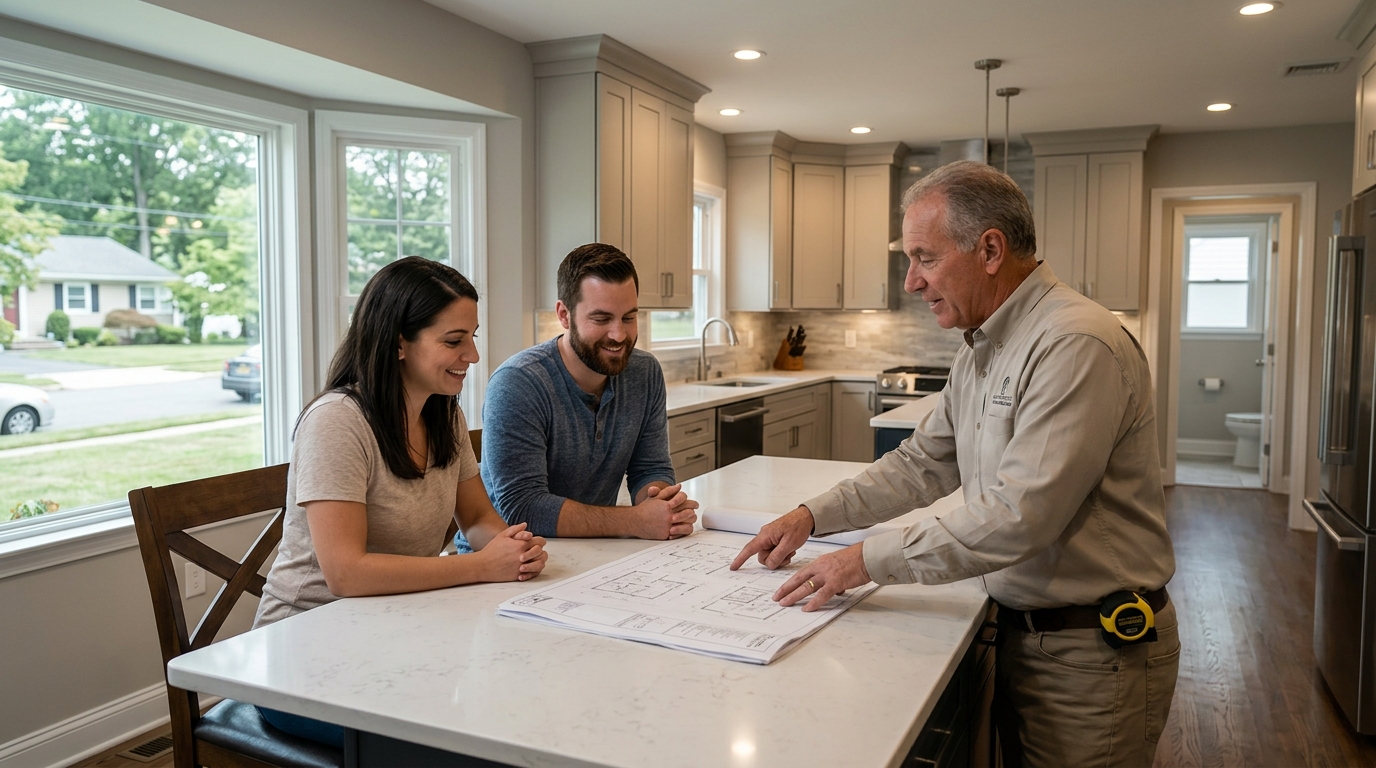
A home remodeling project is one of the biggest investments you will make as a New Jersey homeowner. With annual homeowner spending on improvements expected to reach $522 billion nationwide by the end of 2026, according to Harvard's Joint Center for Housing Studies, the stakes have never been higher. Whether you are planning a kitchen overhaul, a bathroom refresh, or a full exterior upgrade, getting it right from start to finish takes planning, the right contractor, and a clear budget. This guide walks you through every phase so your New Jersey renovation runs smoothly, stays on budget, and adds lasting value to your home.
1. Define Your Goals and Priorities
Before you contact a single contractor, get clear on what you want. Are you remodeling for personal comfort, resale value, or both? A goal-driven plan prevents scope creep, which is the number-one cause of budget overruns in residential renovations.
Lifestyle vs. Resale Value
Projects focused on lifestyle satisfaction, such as primary suite additions and spa-like bathrooms, score a perfect 10 out of 10 on the NAR/NARI Joy Score but often return only 24 to 36 percent at resale. Minor kitchen remodels, on the other hand, deliver both a 10/10 Joy Score and a 113% financial ROI according to the 2025 Cost vs. Value Report. Knowing your priority helps you allocate dollars wisely.
Make a Room-by-Room Wish List
Rank every desired change as "must-have" or "nice-to-have." This simple exercise keeps conversations with your contractor focused. If you are considering a kitchen remodeling project or a bathroom renovation, start there since kitchens and bathrooms dominate renovation activity year after year.
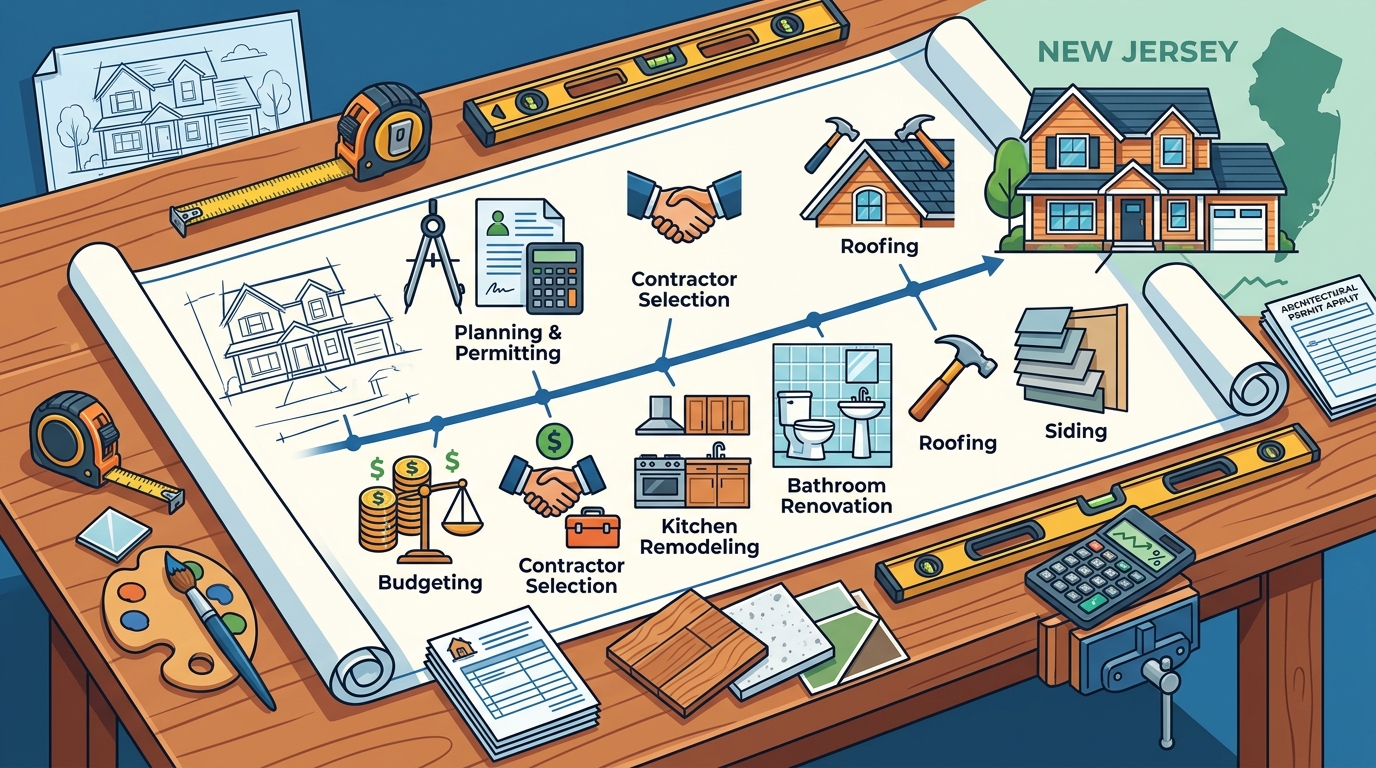
2. Set a Realistic Budget With a Contingency Buffer
A contingency buffer is an additional percentage of your total budget reserved for unexpected costs like hidden water damage or outdated wiring. Industry experts consistently recommend setting aside 10 to 20 percent above your base estimate. In 2024, 39 percent of homeowners exceeded their renovation budget due to surprise expenses, according to Amerisave's cost analysis. Do not let that be you.
Sample Budget Ranges for Popular NJ Projects
| Project Type | Typical NJ Cost Range | National ROI (2025 CvV) |
|---|---|---|
| Minor Kitchen Remodel | $25,000 - $35,000 | 113% |
| Mid-Range Bathroom Remodel | $20,000 - $30,000 | 80% |
| Roofing Replacement | $10,000 - $25,000 | ~100% |
| Siding Replacement (Vinyl) | $12,000 - $22,000 | ~103% |
| Basement Finishing | $30,000 - $60,000 | 71% |
| Garage Door Replacement | $4,000 - $5,500 | 268% |
For detailed local pricing on kitchen renovations in NJ or bathroom remodeling costs in New Jersey, explore our in-depth cost guides.
3. Choose a Licensed NJ Contractor
A home improvement contractor (HIC) is a professional licensed by the state to perform residential renovation work. As of February 1, 2026, New Jersey transitioned from a simple registration system to a comprehensive licensing framework under the newly established State Board of Home Improvement and Home Elevation Contractors. This means municipalities can no longer issue construction permits to unlicensed contractors.
What to Verify Before Signing
- Active NJ Home Improvement Contractor license
- General liability and workers' compensation insurance
- Compliance bond (required tiers: $10,000, $25,000, or $50,000 depending on contract value)
- Portfolio of completed projects and verifiable references
- Written contract specifying scope, timeline, payment schedule, and warranty
With over 40 years of experience and more than 20,000 satisfied customers, American Home Remodeling checks every box. Read our guide on 5 tips for finding a good contractor before making your decision.
4. Navigate New Jersey Permits and Inspections
A building permit is a government-issued authorization that confirms your renovation plans comply with the Uniform Construction Code (UCC). In New Jersey, the UCC is enforced statewide by the Department of Community Affairs, and local jurisdictions are not permitted to amend it. Building permits are required for structural, electrical, HVAC, and plumbing projects, according to Business.NJ.gov.
When Do You Need a Permit?
If your project involves moving plumbing, rewiring electrical, or making structural changes, you almost certainly need one. Smaller cosmetic updates like painting, swapping cabinet doors, or replacing fixtures in the same location typically do not. When in doubt, call your township's building department. For a deeper dive, see our article on NJ permits for kitchen remodels.
What Happens If You Skip Permits?
Skipping permits can result in fines, forced removal of completed work, insurance claim denials, and complications when you try to sell your home. A reputable contractor handles the entire permit and inspection process on your behalf.
5. Plan Your Project Timeline
Realistic scheduling prevents frustration. Permit approval alone can take one to six weeks depending on your municipality and project complexity. Factor in material lead times, weather (especially for roofing and siding projects), and inspection windows.
Tips for Staying on Schedule
- Finalize all design selections before demolition begins.
- Order long-lead materials like custom cabinetry 6 to 8 weeks in advance.
- Build a two-week buffer into your end date for inspections and punch-list items.
- Maintain open weekly communication with your project manager.
Spring and fall are the busiest remodeling seasons in New Jersey. If flexibility allows, scheduling during late winter or mid-summer can mean faster turnaround.
6. Maximize ROI on Your Remodel
Not all renovations are created equal when it comes to recouping your investment. The 2025 Cost vs. Value Report shows that exterior replacement projects consistently offer the highest returns. Garage door replacement leads the nation at 268% ROI, followed by manufactured stone veneer and steel entry door replacement.
For interior projects, a minor kitchen remodel is the only one to crack the top five ROI projects nationally, returning about 113 percent. A mid-range bathroom remodel recoups roughly 80 percent. The pattern is clear: moderate, well-executed updates outperform high-end overhauls at resale.
If your goal is maximum value, consider pairing a roofing and siding upgrade with a minor kitchen refresh. That combination covers both curb appeal and the most-used room in the house.
Key Takeaways
- Define clear goals (lifestyle comfort vs. resale value) before contacting a contractor.
- Budget a 10 to 20 percent contingency to avoid the overspending trap that hits 39% of homeowners.
- Verify your contractor holds an active NJ Home Improvement Contractor license, required since February 2026.
- Obtain all required building permits; skipping them risks fines, rework, and lost home value.
- Exterior curb-appeal projects deliver the highest ROI, with garage door replacement topping the list at 268%.
- Minor kitchen remodels return 113% nationally, making them the best interior ROI project.
- Plan your timeline realistically: allow 1 to 6 weeks for permits plus a two-week buffer for inspections.
Frequently Asked Questions
Do I need a permit for a kitchen remodel in New Jersey?
In most cases, yes. If your kitchen remodel involves moving plumbing, making electrical changes, or altering the structure, you will need building, electrical, and plumbing permits from your local township. Simple cosmetic swaps like painting cabinets usually do not require one.
How much does a kitchen remodel cost in NJ?
A minor kitchen remodel in New Jersey typically ranges from $25,000 to $35,000, while a major mid-range overhaul can exceed $75,000. The minor approach delivers far better ROI at 113% compared to roughly 51% for a major upscale renovation.
How do I find a licensed remodeling contractor in New Jersey?
Since February 2026, NJ requires all home improvement contractors to hold an active license issued by the State Board of Home Improvement Contractors. Ask for the license number, verify insurance, and check for a compliance bond before signing any agreement.
What is the best time of year to remodel in New Jersey?
Spring and fall are peak seasons for exterior projects like roofing and siding. Interior projects such as kitchens and bathrooms can be done year-round. Scheduling during late winter or mid-summer often means less competition for contractor availability.
How long does a typical home remodeling project take in NJ?
Timelines vary widely. A minor kitchen update may take 4 to 6 weeks, while a full bathroom renovation runs 3 to 5 weeks. Permit approval adds 1 to 6 weeks depending on your municipality. Always build buffer time into your schedule.
What home improvements offer the best return on investment?
According to the 2025 Cost vs. Value Report, garage door replacement (268% ROI), manufactured stone veneer, and steel entry doors top the list. Among interior projects, a minor kitchen remodel (113% ROI) and mid-range bathroom remodel (80% ROI) lead the way.
Should I set aside extra money beyond my remodeling budget?
Absolutely. Experts recommend a 10 to 20 percent contingency fund. Nearly 40 percent of homeowners exceeded their budgets in 2024 due to hidden issues like water damage and outdated wiring.
Start Your NJ Remodeling Project Today
Ready to transform your New Jersey home? American Home Remodeling has served over 20,000 homeowners across the state with more than four decades of trusted craftsmanship. From kitchens and bathrooms to roofing, siding, and basement finishing, we handle every phase from permits to final inspection. Contact us today for a free consultation and take the first step toward a successful remodel.