
Siding Replacement Cost Factors and ROI for New Jersey Homeowners
New Jersey homeowners face unique weather challenges that accelerate siding wear, making timely replacement a critical maintenance priority rather than a luxury. Recent industry data indicates that the average cost for siding replacement in the Northeast ranges from $8,000 to $25,000, depending heavily on material choice and home size. This financial commitment is not merely an expense but a strategic investment that directly impacts property value, energy efficiency, and structural integrity. Understanding the specific cost drivers in the Garden State allows homeowners to budget accurately and maximize their return on investment. (Contact Us)
Material Selection and Price Variance
The single largest factor influencing your siding replacement cost is the choice of material. Each option offers distinct advantages regarding durability, aesthetics, and long-term maintenance. Vinyl siding remains the most popular choice due to its affordability and low maintenance requirements. It is a synthetic polymer material designed to resist moisture, pests, and fading. While cost-effective, it may lack the premium aesthetic appeal of natural materials.
Fiber cement siding has gained significant traction in New Jersey due to its exceptional durability. It is a composite material made from sand, cement, and cellulose fibers that mimics the look of wood without the rotting issues. This material often commands a higher upfront price but offers a lifespan exceeding 50 years. The initial investment is justified by its resistance to severe coastal storms and humidity common in areas like Jersey Shore.
Engineered wood siding provides a high-end natural look with improved stability over traditional wood. It is a manufactured product created by bonding wood strands with adhesives under high pressure. This option requires more maintenance than vinyl or fiber cement but offers superior insulation properties. Homeowners in historic districts often prefer this material for its authentic appearance.
Brick veneer and stone siding represent the premium tier of exterior cladding options. These materials offer unmatched durability and a timeless aesthetic that never goes out of style. The installation complexity and material weight significantly drive up the total project cost. However, the added value to the home's resale price is substantial in high-end New Jersey markets.
New Jersey Labor and Permitting Costs
Labor costs in New Jersey are among the highest in the nation due to the cost of living and the skilled trade demand. According to Bureau of Labor Statistics data, construction wages in the Northeast region consistently outpace the national average. This economic reality means that homeowners must allocate a larger portion of their budget to skilled installation rather than just materials.
Permitting requirements vary by municipality across New Jersey. Some towns require strict building permits for exterior changes, while others have more relaxed codes. The New Jersey Division of Consumer Affairs provides guidelines on contractor licensing and consumer protection. Ignoring local permit requirements can lead to fines and complications during future home sales.
Accessibility and home height also impact labor costs. Multi-story homes require specialized scaffolding and safety equipment, increasing the time and cost of installation. OSHA safety regulations mandate strict protocols for working at heights, which can extend project timelines. Complex architectural features like gables, dormers, and intricate trim work add to the labor hours required.
Removal and Disposal Variables
Existing siding removal is a necessary step in most replacement projects. The condition of the underlying sheathing and insulation often dictates additional costs. If the old siding has trapped moisture, the wood underneath may be rotted and require full replacement. EPA guidelines for hazardous material disposal apply if the existing siding contains asbestos, which was common in homes built before 1980. Asbestos abatement requires specialized professionals and adds significant cost to the project.
Disposal fees vary by county in New Jersey. Landfills charge by weight or volume, and hauling services add to the expense. New Jersey Department of Environmental Protection regulations ensure that construction debris is disposed of properly. Homeowners should ask their contractor to include disposal costs in the initial quote to avoid surprise fees.
Weatherproofing the exposed structure is critical during the removal process. If the project is delayed by rain, the underlying wood can absorb moisture and lead to mold growth. ASHRAE standards for building envelope performance emphasize the importance of maintaining a continuous weather barrier. Professional contractors will use temporary tarps or house wrap to protect the home during the transition.
Return on Investment Analysis
Replacing siding is one of the most effective ways to increase home value. The 2024 Cost vs. Value Report by Remodeling Magazine indicates that vinyl siding replacement recoups approximately 60 to 70 percent of its cost at resale. Fiber cement siding often yields a higher return due to its premium perception and durability. In New Jersey's competitive real estate market, curb appeal is a decisive factor for buyers.
Energy efficiency is another major component of ROI. New siding improves the thermal envelope of the home, reducing heating and cooling costs. The U.S. Department of Energy states that proper insulation and weatherization can reduce energy bills by up to 20 percent. In New Jersey, where winters are cold and summers are humid, this efficiency gain is particularly valuable for comfort and cost savings.
Protection against moisture damage prevents costly structural repairs. Water intrusion can lead to rot, mold, and foundation issues. The National Home Maintenance Club reports that regular exterior maintenance extends the lifespan of a home's structural components. By investing in quality siding, homeowners avoid the much higher costs of emergency repairs and structural remediation.
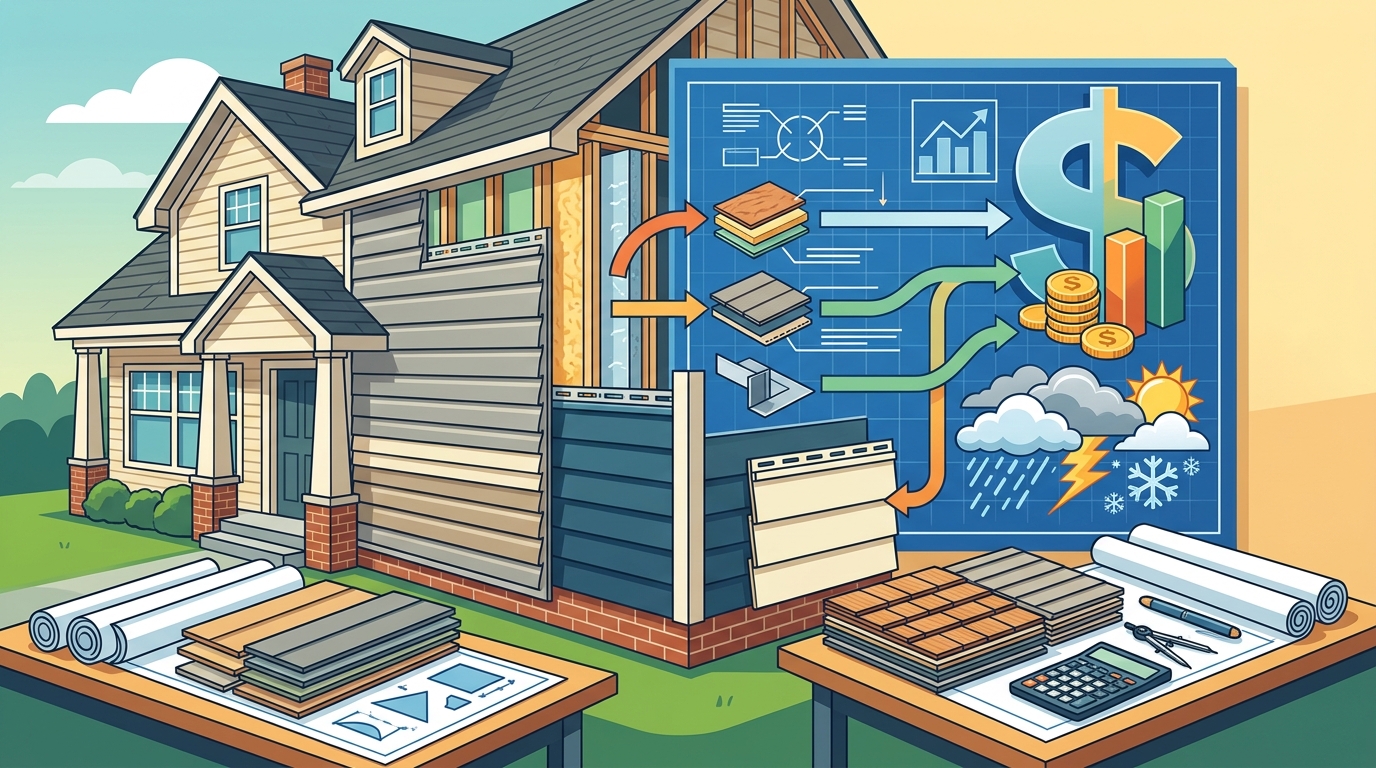
Material Comparison Table
The following table summarizes the key characteristics of common siding materials available for New Jersey homeowners. This comparison helps in weighing the initial cost against long-term benefits.
| Material Type | Average Cost per Sq. Ft. | Lifespan | Maintenance Level | ROI Estimate |
|---|---|---|---|---|
| Vinyl Siding | $3 - $7 | 20 - 40 years | Low | 60 - 70% |
| Fiber Cement | $6 - $12 | 50+ years | Medium | 70 - 80% |
| Engineered Wood | $5 - $10 | 20 - 30 years | High | 50 - 65% |
| Brick Veneer | $10 - $20 | 100+ years | Low | 80 - 90% |
Key Takeaways
- Material choice is the primary driver of cost, with vinyl being the most affordable and brick veneer the most expensive.
- New Jersey labor costs are higher than the national average due to skilled trade demand and living expenses.
- Permitting requirements vary by municipality, so checking local codes is essential before starting work.
- Asbestos abatement may be necessary for older homes, adding significant cost and time to the project.
- Fiber cement siding offers the best balance of durability and ROI for New Jersey's climate.
- Energy efficiency improvements can reduce utility bills by up to 20 percent over time.
- Proper weatherproofing during installation prevents costly moisture damage to the home's structure.
Frequently Asked Questions
How long does siding replacement take in New Jersey?
Most residential siding projects take between one to three weeks, depending on the size of the home and the material used. Complex architectural details or weather delays can extend the timeline.
Is a permit required for siding replacement in NJ?
Permit requirements vary by town. Some municipalities require permits for structural changes or asbestos removal, while others do not. It is best to check with your local building department.
Does new siding increase home value?
Yes, new siding significantly boosts curb appeal and can recoup 60 to 80 percent of its cost at resale, depending on the material chosen.
What is the best siding for New Jersey's climate?
Fiber cement siding is often considered the best option due to its resistance to humidity, salt air, and temperature fluctuations common in the region.
How do I know if I need asbestos abatement?
If your home was built before 1980, the existing siding may contain asbestos. A professional inspection is required to determine if abatement is necessary.
Can I stay in my home during siding replacement?
Yes, homeowners can typically remain in their homes during the project. However, noise and temporary loss of exterior access may occur.
What maintenance does fiber cement siding require?
Fiber cement siding requires repainting every 10 to 15 years. It is resistant to rot and pests, reducing other maintenance needs.
Get Your Free Estimate
Ready to improve your home's exterior and value? Contact American Home Remodeling today for a comprehensive assessment and detailed quote. Our team of experts is ready to guide you through the process, ensuring a seamless and high-quality siding replacement. Explore our full range of remodeling services to transform your home.