
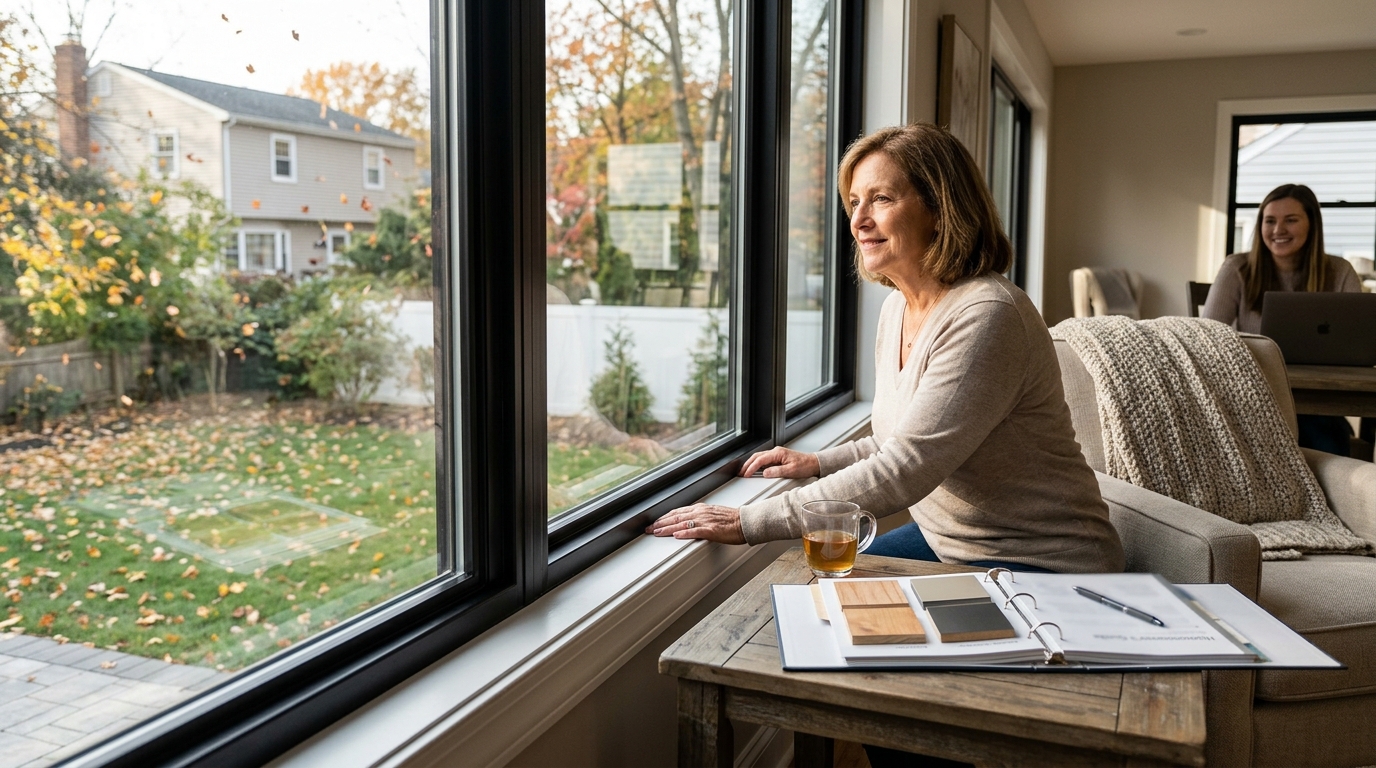
Homeowners in New Jersey face unique weather challenges, from humid summers to harsh, snowy winters. These conditions demand windows that provide superior insulation, durability, and energy efficiency. According to the U.S. Department of Energy, windows account for 25 to 30 percent of residential heating and cooling energy use. Choosing the right material is not just an aesthetic decision; it is a critical investment in your home's comfort and long-term value. This guide compares the three most popular window materials: vinyl, fiberglass, and wood, to help you determine which is best for your property. (Customer Reviews for Home)
Why Window Material Matters in NJ
New Jersey experiences four distinct seasons, each placing different stresses on home exteriors. Summer humidity can warp materials, while winter freeze-thaw cycles can crack seals and frames. The right window material must withstand these fluctuations without degrading. Energy efficiency is the primary driver for most homeowners in the Tri-State area. Poorly insulated windows lead to higher utility bills and reduced comfort. American Home Remodeling has served over 20,000 customers in New Jersey, observing firsthand how material choice impacts long-term home performance. We recommend evaluating not just the initial cost, but the lifecycle value of each option. (Expert Home Remodeling Roofing)
Vinyl Windows: The Cost-Effective Standard
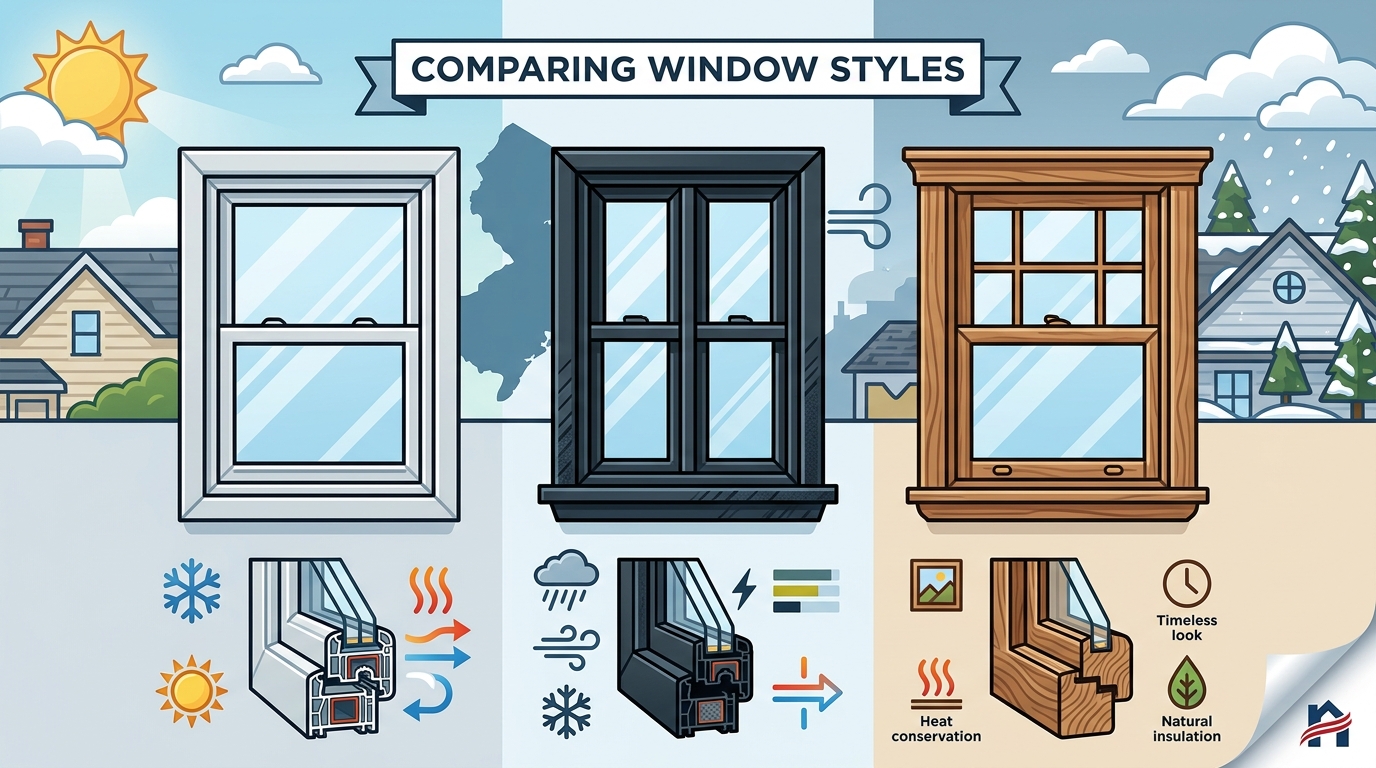
Vinyl windows are the most popular choice for residential renovations in the United States. They offer a balance of affordability, low maintenance, and decent thermal performance. Vinyl is a synthetic material made from polyvinyl chloride (PVC), which is naturally resistant to moisture and rot. (Expert Home Remodeling Roofing)
Pros of Vinyl Windows
The primary advantage of vinyl is its price point. It is typically 20 to 30 percent less expensive than wood or fiberglass options. Additionally, vinyl requires virtually no maintenance. You do not need to paint or seal it. The color is extruded throughout the material, so scratches are less noticeable. For homeowners in Essex County or Bergen County looking for a budget-friendly upgrade, vinyl is a strong candidate.
Cons of Vinyl Windows
While durable, vinyl has limitations. It cannot be painted, which restricts color customization. In extreme heat, vinyl can expand and contract, potentially leading to seal failure over time. It also has a lower strength-to-weight ratio compared to fiberglass, meaning larger windows may require more reinforcement. Despite these drawbacks, vinyl remains a top choice for mid-range remodeling projects.
Fiberglass Windows: The Durable Contender
Fiberglass windows are constructed from strands of glass embedded in a resin matrix. This material is known for its exceptional strength and dimensional stability. Fiberglass is an excellent choice for homeowners who want the performance of wood without the high maintenance requirements.
Pros of Fiberglass Windows
Fiberglass is significantly stronger than vinyl, allowing for slimmer frames and larger glass areas. This maximizes natural light entry. It expands and contracts at a rate similar to glass, which reduces the risk of seal failure and air leaks. Fiberglass can be painted, offering greater design flexibility. It is also highly resistant to rot, corrosion, and impact damage. For homes in coastal areas of New Jersey, fiberglass offers superior resistance to salt air corrosion.
Cons of Fiberglass Windows
The main drawback is the cost. Fiberglass windows are generally more expensive than vinyl, though often less than high-end wood. The initial investment is higher, but the longevity and energy savings often justify the price. Availability can also be more limited compared to vinyl, requiring specialized contractors for installation.
Wood Windows: The Premium Classic
Wood windows are the traditional choice for historic homes and high-end custom builds. They offer unmatched aesthetic appeal and natural insulation properties. Wood is a renewable resource and provides a warm, organic look that synthetic materials cannot fully replicate.
Pros of Wood Windows
Wood has the best natural insulating value of the three materials, helping to keep homes warm in winter and cool in summer. It is highly customizable, allowing for intricate shapes and detailed molding. Wood windows can be painted or stained to match any interior or exterior design scheme. They add significant resale value to a property due to their premium perception.
Cons of Wood Windows
Wood requires the most maintenance. It must be painted or stained regularly to protect against moisture, rot, and insect damage. In New Jersey's humid summers, wood is susceptible to swelling and warping if not properly sealed. It is also the most expensive option upfront. For homeowners unwilling to commit to regular upkeep, wood may not be the best choice.
Material Comparison Summary
The following table summarizes the key differences between vinyl, fiberglass, and wood windows to aid in your decision-making process.
| Feature | Vinyl Windows | Fiberglass Windows | Wood Windows |
|---|---|---|---|
| Cost | Low to Moderate | Moderate to High | High |
| Maintenance | Very Low | Low | High |
| Durability | Good | Excellent | Good (with care) |
| Insulation | Good | Very Good | Excellent |
| Customization | Limited | High (paintable) | Unlimited |
| Lifespan | 20-40 years | 30-50+ years | 20-30 years (maintained) |
Key Takeaways
- Vinyl is the budget leader: It offers the lowest upfront cost and requires minimal maintenance, making it ideal for standard renovations.
- Fiberglass offers the best balance: It combines the strength of steel with the insulation of wood, providing superior durability and energy efficiency.
- Wood is for aesthetics: Choose wood if you prioritize natural beauty and customization, and are willing to perform regular maintenance.
- Energy efficiency varies: All three materials can be energy-efficient, but wood and fiberglass generally provide better natural insulation values.
- Climate matters: In New Jersey's humid and variable climate, fiberglass and vinyl resist moisture damage better than untreated wood.
- Long-term value: While wood has a high initial cost, its lifespan can be extended with care. Fiberglass often has the longest lifespan with the least maintenance.
- Professional installation is key: Regardless of material, proper installation by experts like American Home Remodeling ensures optimal performance and warranty validity.
Frequently Asked Questions
Which window material is most energy efficient?
Wood has the best natural insulating properties, followed closely by fiberglass. Vinyl is also energy efficient, especially when filled with insulating gas. The overall efficiency depends on the window's construction, glazing, and installation quality.
Are vinyl windows durable enough for New Jersey weather?
Yes, modern vinyl windows are designed to withstand temperature fluctuations and moisture. They are resistant to rot and corrosion, making them suitable for New Jersey's climate. However, they may expand and contract more than fiberglass.
How much do fiberglass windows cost compared to vinyl?
Fiberglass windows typically cost 20 to 40 percent more than vinyl windows. The higher price reflects the material's strength, durability, and lower maintenance requirements over time.
Do I need to maintain wood windows?
Yes, wood windows require regular maintenance, including painting or staining every three to five years. This protects the wood from moisture, rot, and insect damage. Without maintenance, wood windows can deteriorate quickly.
Can I paint fiberglass windows?
Yes, one of the advantages of fiberglass windows is that they can be painted. This allows you to customize the color to match your home's exterior. Vinyl windows, in contrast, cannot be painted effectively.
What is the lifespan of vinyl windows?
Vinyl windows typically last between 20 and 40 years, depending on the quality of the material and installation. High-quality vinyl with reinforced frames can last longer.
Which window material is best for historic homes?
Wood windows are often the best choice for historic homes due to their aesthetic authenticity and ability to be crafted into intricate shapes. However, fiberglass can mimic the look of wood with less maintenance.
Schedule Your Consultation
Choosing the right window material is a significant decision that impacts your home's comfort, energy bills, and curb appeal. American Home Remodeling offers expert guidance to help you navigate these options. We provide comprehensive home remodeling services in New Jersey, including window installation and replacement. Our team has over 40 years of experience serving homeowners in Essex, Union, and Bergen counties. We offer 100% financing for qualified customers, making your upgrade more affordable. Contact us today to schedule a consultation and discover how we can transform your home.