

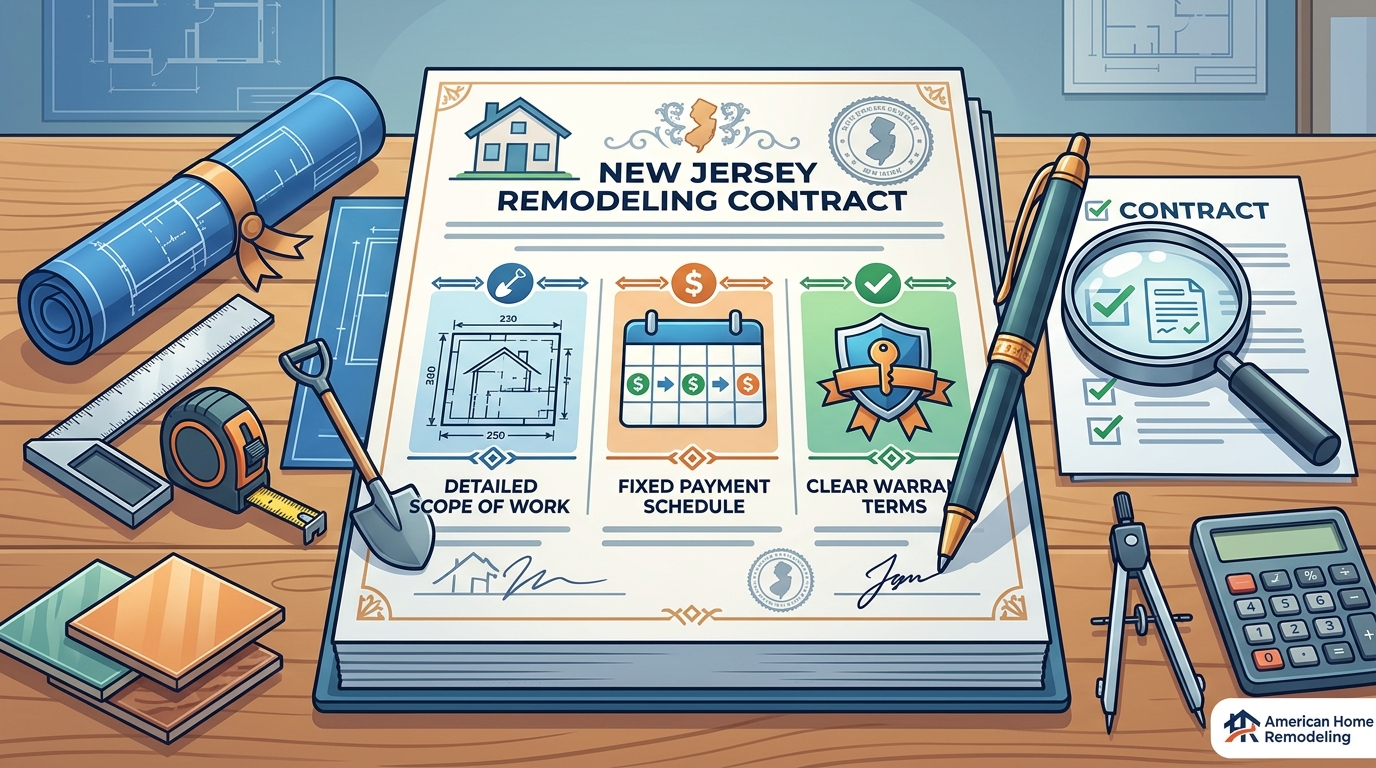
Every New Jersey homeowner should include a detailed scope of work, a fixed payment schedule, and clear warranty terms in their remodeling contract. These three elements protect your investment and prevent costly disputes. American Home Remodeling ensures every agreement is transparent and legally sound.
Defining the Scope of Work
A scope of work is a detailed written description of every task, material, and finish included in your project. Vague language like "update the kitchen" leads to expensive surprises. Your contract must list specific cabinet brands, countertop materials, and appliance models. For example, specifying "Shaker-style oak cabinets with soft-close hinges" prevents a contractor from substituting cheaper alternatives. This level of detail ensures you get exactly what you envisioned.
Establishing a Clear Payment Schedule
Setting Realistic Timelines and Deadlines
Specifying Warranty and Liability Terms
Managing Change Orders and Permits
A change order is a written amendment to the original contract that adjusts the price or timeline for new work. If you decide to add a walk-in closet halfway through a bathroom remodel, that is a change order. It must be signed by both parties before work begins. Additionally, your contract should specify who is responsible for pulling permits. In New Jersey, permits are required for structural changes, electrical work, and plumbing. The contractor should handle this process to ensure compliance with local building codes.
Key Takeaways
- Define the scope of work with specific brands and materials.
- Use a milestone-based payment schedule to protect your funds.
- Require a one-year workmanship warranty in writing.
- Specify liability for damage to existing home features.
- Use signed change orders for any work not in the original plan.
- Ensure the contractor is responsible for pulling all necessary permits.
Frequently Asked Questions
What is the most important part of a remodeling contract?
The scope of work is the most critical section. It defines exactly what will be done and what materials will be used. Without a detailed scope, you have no legal basis to dispute substandard work or missing items.
How much should I pay as a deposit?
A standard deposit is between 10% and 20% of the total project cost. Avoid paying more than 20% upfront. The rest should be tied to completed milestones to ensure the contractor finishes the job.
Who is responsible for pulling permits in New Jersey?
The general contractor is typically responsible for pulling permits. They must ensure all work complies with local building codes. If a homeowner pulls permits, they assume full liability for code violations.
What happens if the contractor goes out of business?
If a contractor goes out of business, you may lose your deposit and any uncompleted work. To mitigate this risk, use a payment schedule that holds back a significant portion until the project is finished. You can also check the contractor's financial stability before signing.
Do I need a lawyer to review my remodeling contract?
How do I handle disputes with my contractor?
Final Thoughts
A strong remodeling contract is your best defense against project failures. By defining the scope, payment terms, and warranties, you protect your home and your budget. American Home Remodeling provides clear, comprehensive contracts for every project. To start your renovation with confidence, contact our team. Learn more: Contact Us American Home.