
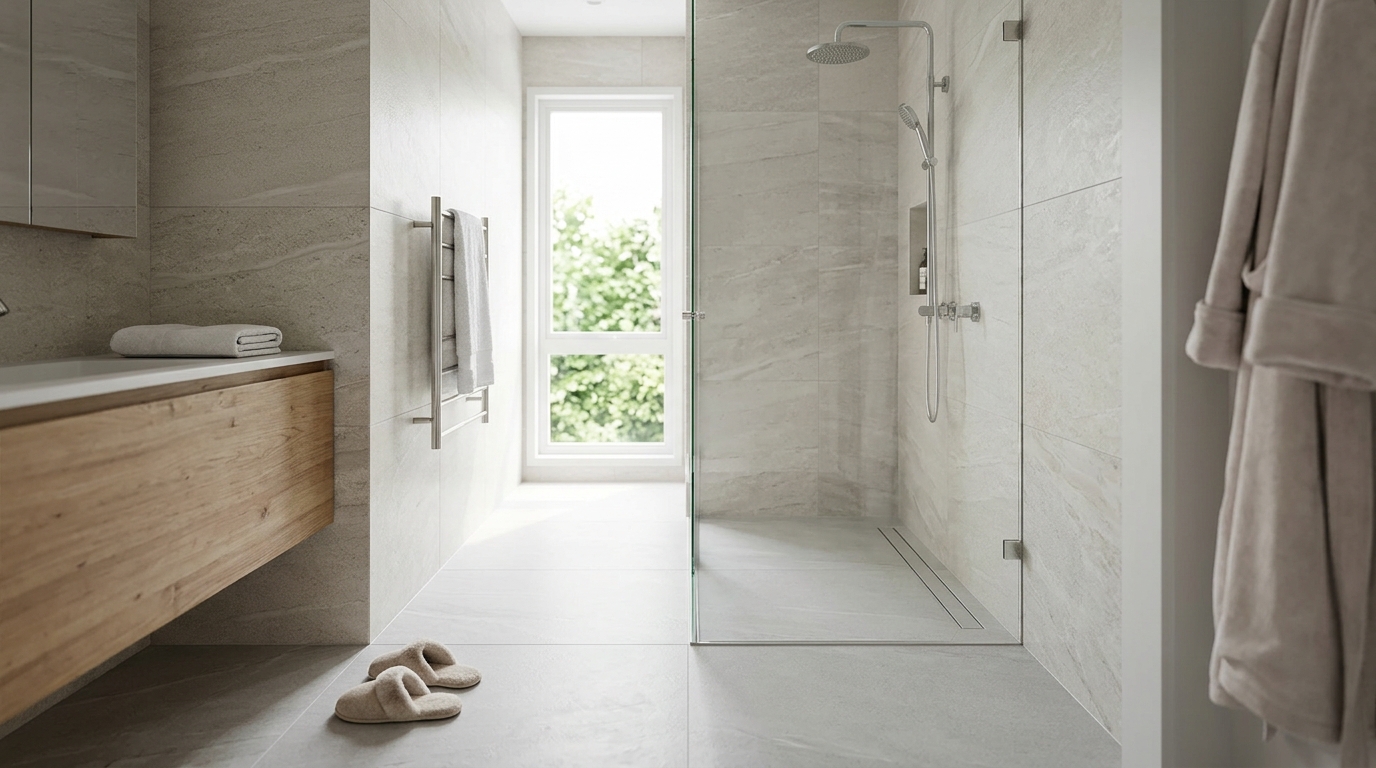
Installing a barrier-free shower in a small bathroom maximizes usable floor space, improves accessibility, and enhances safety. By removing the traditional curb, you create a seamless transition that makes the room feel larger and more open. This design choice is particularly effective in New Jersey homes where square footage is often at a premium. American Home Remodeling helps homeowners navigate these spatial challenges with expert craftsmanship and practical design solutions.
Maximizing Usable Floor Space
Small bathrooms often suffer from clutter and restricted movement. A barrier-free shower eliminates the physical barrier of a curb, allowing the floor to flow continuously from the vanity to the shower area. This open layout makes the room feel significantly larger than its actual dimensions. For example, a 5x8 foot bathroom can feel cramped with a raised curb, but a curbless design opens up the entire footprint for easier navigation. For additional details, review the Contact Us American Home.
The absence of a curb also allows for more flexible placement of accessories. You can position a towel rack or a small plant in the corner without worrying about tripping over a step. This spatial efficiency is a key benefit for homeowners in densely populated areas like Bergen County or Essex County. The continuous floor line reduces visual noise, which is a critical factor in making small spaces feel airy and uncluttered. For additional details, review the Customer Reviews for Home.
Enhancing Safety and Accessibility
Slippery surfaces are a major hazard in bathrooms, especially for older adults or individuals with mobility issues. A barrier-free shower removes the tripping hazard associated with stepping over a curb. This design aligns with universal design principles, making the space safer for all users. The smooth transition reduces the risk of falls, which is a significant concern in aging-in-place renovations. For additional details, review the Essential Tips for Successful.
Improving Water Management and Drainage
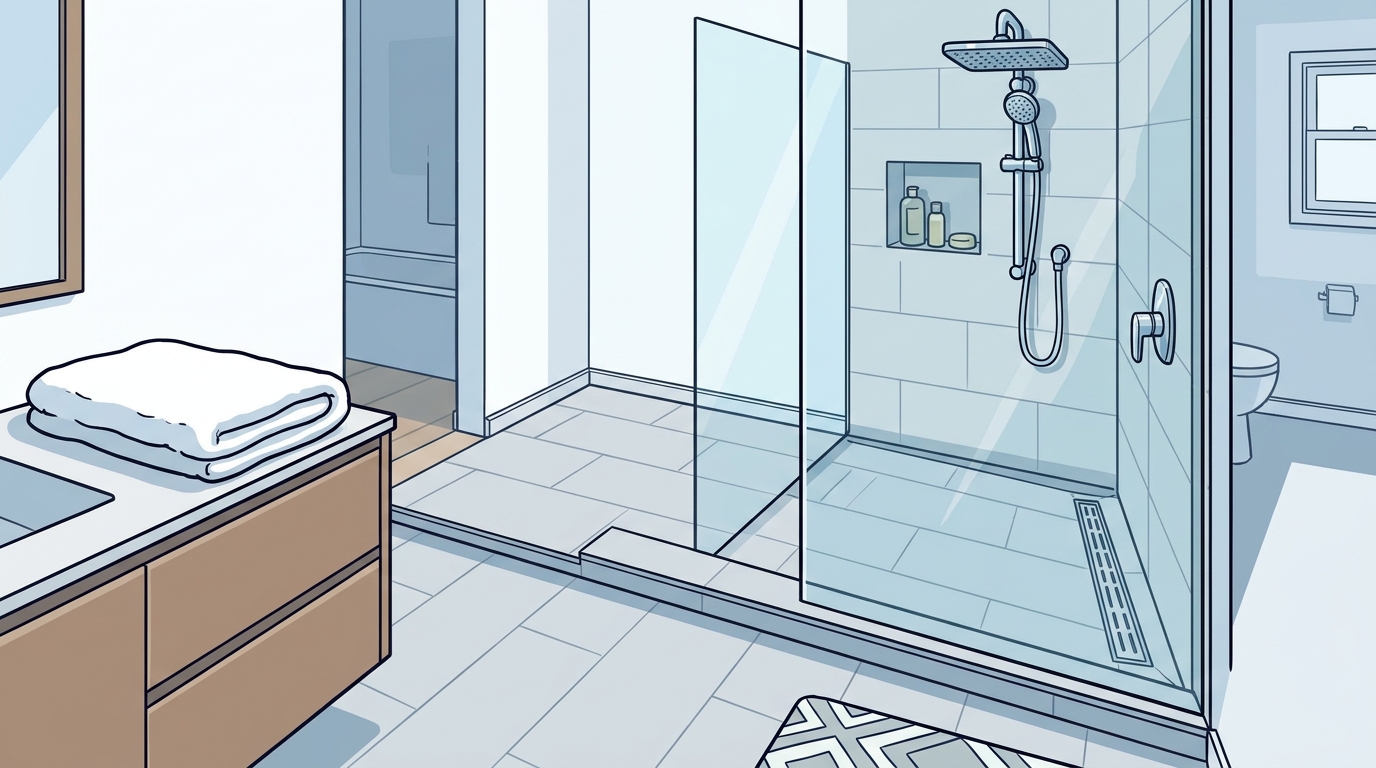
One common concern with barrier-free showers is water leakage. However, modern construction techniques and high-quality materials make this a manageable issue. Proper slope and linear drains are essential for effective water management. A linear drain runs along the length of the shower, allowing water to flow efficiently to a single point. This design is particularly effective in small spaces where a central drain might be difficult to accommodate. For additional details, review the New Jersey Local Home.
Using a linear drain also simplifies the installation process. It requires less excavation and structural modification compared to a traditional point drain. This can reduce construction time and costs. Additionally, a well-designed barrier-free shower can prevent water from pooling on the floor, which helps protect the subfloor from moisture damage. Proper waterproofing is critical to ensure the longevity of your investment.
Boosting Home Value and Aesthetics
The aesthetic appeal of a barrier-free shower extends beyond the shower itself. It influences the overall design of the bathroom. You can choose large-format tiles that continue from the shower into the rest of the room, creating a cohesive look. This design choice enhances the visual flow of the space. It is a subtle but impactful way to modernize your bathroom without a full-scale renovation.
Practical Considerations for NJ Homeowners
When planning a barrier-free shower, consider the specific conditions of your home. Older New Jersey homes may have unique structural challenges that require careful planning. Working with an experienced contractor ensures that these issues are addressed properly. They can assess the existing plumbing and structural integrity to determine the best approach. This expertise is crucial for a successful installation.
Material selection is another important factor. Porcelain and ceramic tiles are popular choices for their durability and water resistance. You can also consider natural stone for a more luxurious look. The choice of materials should align with your budget and design preferences. A well-chosen material can enhance the overall aesthetic and functionality of the space.
Key Takeaways
- Barrier-free showers maximize usable floor space in small bathrooms.
- They improve safety and accessibility by eliminating tripping hazards.
- Proper drainage with linear drains is essential for water management.
- Working with an experienced contractor ensures a successful installation.
- Material selection plays a crucial role in durability and style.
Frequently Asked Questions
Is a barrier-free shower suitable for a small bathroom?
Yes, it is ideal for small bathrooms as it maximizes space and improves flow.
How do I prevent water leakage in a curbless shower?
Use proper waterproofing and a linear drain with a correct slope.
What materials are best for a barrier-free shower floor?
Porcelain and ceramic tiles are popular for their durability and water resistance.
Can I install a barrier-free shower in an older home?
Yes, but it may require structural modifications and careful planning.